
Why Is Crypto Mining Noisy: Complete Guide
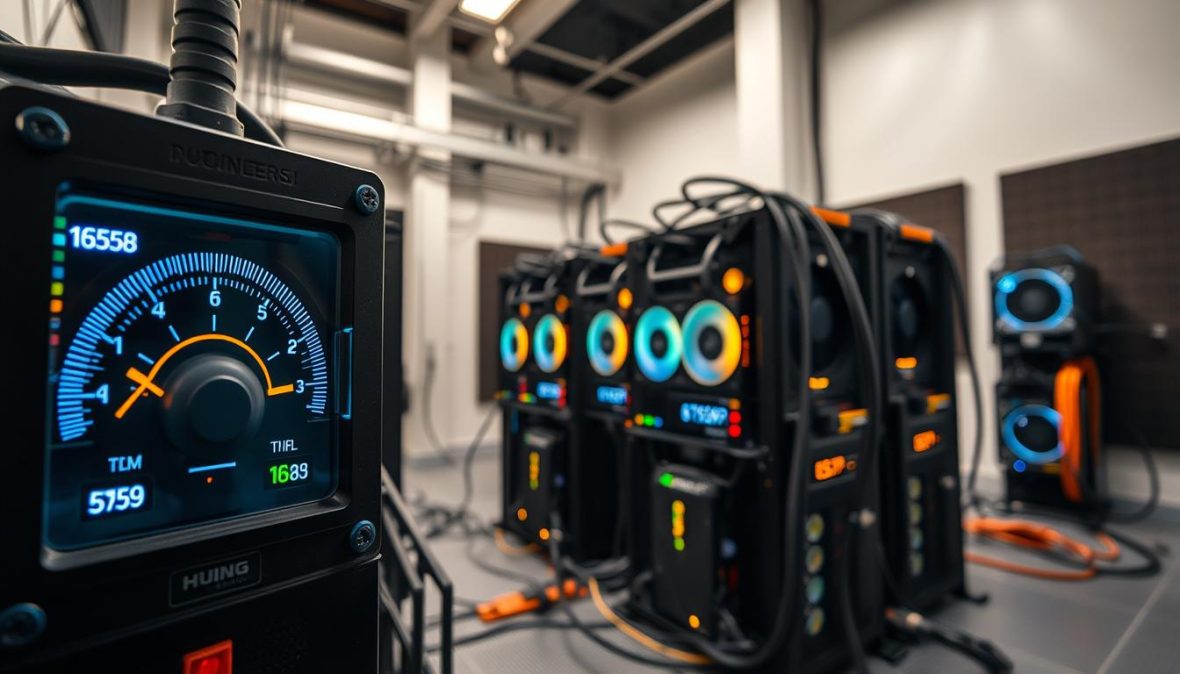
Did you know that a typical ASIC miner produces between 70-90 decibels? That’s like standing next to a running lawn mower. It’s also similar to being inside a busy restaurant.
I’ll be honest with you. The first time I set up a rig in my spare bedroom, I thought something was seriously wrong. The racket was intense, and my partner wasn’t thrilled.
But here’s the thing: the sound output isn’t a defect. It’s actually a fundamental characteristic of how these machines work.
In this complete guide, I’m going to walk you through exactly what causes those sounds. More importantly, I’ll show you what you can actually do about it.
I’ve spent years working with equipment, from small GPU rigs to industrial ASIC setups. Understanding the acoustic levels is the first step to managing them.
You might be setting up your first rig or trying to quiet down an existing operation. This guide covers everything you need to know. We’ll look at real decibel measurements and compare different hardware types.
We’ll also explore cutting-edge silent cooling technologies that actually work.
Key Takeaways
- ASIC miners typically generate 70-90 decibels, comparable to lawn mower sound levels
- Equipment noise stems from high-speed cooling fans required to prevent hardware overheating
- Understanding sound sources is essential before implementing any reduction strategies
- Multiple practical solutions exist, from acoustic enclosures to liquid cooling systems
- Different hardware types produce varying acoustic outputs, affecting setup location choices
- Proper ventilation design can significantly reduce perceived sound without compromising performance
Understanding Crypto Mining Noise
Learning what creates noise in mining operations changed how I build and maintain my setup. The noise isn’t just background hum. It’s a complex mix of mechanical and electrical sounds reaching levels like highway traffic or industrial machinery.
I didn’t realize how loud these rigs would be until my neighbor knocked on my door. He asked if I’d started running a jet engine in my garage.
The mining hardware acoustic issues you’ll encounter aren’t accidental. They’re a direct result of how these machines are designed to work. Every component plays a role in the overall sound profile.
What Causes Noise in Mining Operations?
The cryptocurrency mining cooling noise comes from three distinct sources. Each one contributes differently to the overall sound level. Getting familiar with these sources is the first step toward managing them effectively.
Cooling fans are the primary noise generators in any mining setup. These aren’t your typical computer fans. They’re industrial-grade components designed to move serious volumes of air.
Mining processors run at maximum capacity continuously, generating heat that would damage the chips without aggressive cooling. The fans need to spin fast enough to push air through dense heatsinks. They also move air across multiple components simultaneously.
I measured my first ASIC miner at around 75 decibels from three feet away. That’s roughly the same volume as a vacuum cleaner running constantly. The relationship between fan speed and noise is exponential.
Vibration noise was something I completely underestimated initially. High-speed fans create vibrations that transfer through every surface they touch. My first rig on a metal rack made the entire structure resonate like a tuning fork.
The vibrations traveled through the floor and walls, amplifying the perceived noise significantly. The surface material matters more than you’d think. Metal amplifies vibrations while rubber dampens them.
Electrical components produce the quietest sounds but they’re still present. Power supplies, voltage regulators, and capacitors can create humming or buzzing under heavy electrical loads. This is usually only noticeable when the fans aren’t running.
The Role of Hardware in Noise Production
Mining hardware is engineered with a single priority: computational performance per watt. Acoustic comfort isn’t even on the design checklist for most manufacturers. Companies like Bitmain or MicroBT optimize hash rate and power efficiency because those metrics directly impact profitability.
This creates an interesting problem with mining hardware acoustic issues. The more powerful the chip, the more heat it generates. More heat requires more aggressive cooling.
More aggressive cooling means louder fans and higher airflow. It’s a cycle that pushes noise levels higher with each generation of mining equipment.
I’ve noticed that consumer-grade GPU mining rigs can actually be quieter than dedicated ASICs. That’s because GPUs weren’t originally designed solely for mining. They have more balanced thermal solutions.
ASICs, on the other hand, are purpose-built machines where every design choice prioritizes hash rate over comfort. The acoustic arms race in mining hardware shows no signs of slowing down. Newer chips with higher transistor density generate more concentrated heat in smaller areas.
The Equipment Used in Crypto Mining
Setting up a mining operation means understanding equipment noise profiles. The hardware powering your crypto mining determines how much sound you’ll deal with daily. Not all mining machines create equal noise levels.
The bitcoin mining equipment sound varies based on several factors. These include hardware type, power consumption, cooling requirements, and number of units running. Testing multiple setups revealed acoustic differences that surprised me more than performance variations.
ASIC Miners and Their Noise Levels
ASIC miners represent the loudest category of mining equipment you’ll encounter. These specialized machines are built exclusively for mining specific cryptocurrencies like Bitcoin. The Antminer S19, one of the most popular models, generates around 75-80 decibels during operation.
Those ASIC miner sound decibels compare to standing next to a busy highway during rush hour. Some high-performance models push even higher, reaching 85+ decibels. My first S19 measured 78 dB consistently – louder than most people expect.
ASICs generate so much noise due to their design philosophy. Manufacturers prioritize maximum hash rate and efficiency in the smallest possible form factor. This creates intense heat concentration, requiring multiple high-RPM fans running constantly.
These machines typically use small 120mm fans spinning at 5,000-6,000 RPM. This creates that characteristic high-pitched whine. Dense chip arrangement and narrow airflow channels amplify the sound further.
GPU Mining Rigs: Sound Comparison
GPU mining rigs operate considerably quieter than their ASIC counterparts. A typical six-card GPU setup runs between 60-70 decibels. This depends on your fan configuration and the specific graphics cards you’re using.
The advantage with GPU mining comes from flexibility. You control the individual fan curves for each graphics card. This allows you to balance temperature, performance, and noise.
GPU mining noise reduction becomes achievable through several approaches. You can install aftermarket coolers with larger, slower-spinning fans. Water cooling represents another option, though it adds complexity and cost.
The trade-off with GPU rigs is clear. Quieter operation usually means either higher temperatures or reduced hash rates. But the level of control makes GPU setups more suitable for home environments.
Cooling Systems: Necessity vs. Noise
Cooling systems create the fundamental dilemma in crypto mining acoustics. You absolutely cannot run mining hardware without adequate cooling. Thermal throttling kills your hash rate instantly, and excessive heat permanently damages expensive components.
Air cooling remains the standard approach. It uses combinations of intake and exhaust fans, heatsinks, and sometimes ducting systems. Larger fans spinning at lower RPMs move air more quietly than smaller, faster fans.
Some operations invest in liquid cooling systems. These can reduce overall noise levels but introduce new challenges. You’re dealing with pumps, radiators, and the risk of leaks near sensitive electronics.
Immersion cooling setups eliminate fans entirely by submerging hardware in dielectric fluid. The results are remarkably quiet – you only hear the fluid circulation pump. But the initial investment puts this beyond reach for most small-scale miners.
Statistical Analysis of Noise Levels
Measuring mining noise with instruments reveals clear patterns. This helps you make smart decisions. I’ve tested dozens of setups over the years.
The data shows consistent results across different equipment types. Numbers give you an objective framework. They show if your operation stays within legal limits.
Average Decibel Levels of Mining Equipment
ASIC miners produce the highest crypto mining noise level readings. Most modern units operate between 70 and 85 decibels. Measurements are taken from one meter away.
The Antminer S19 Pro generates approximately 75 dB during standard operation. The WhatsMiner M30S++ runs slightly louder at around 78 dB. Older ASICs from 2016-2018 can exceed 85 dB.
To understand ASIC miner sound decibels, compare them to everyday sounds. At 75 dB, it equals a vacuum cleaner in the same room. At 80 dB, it’s like a garbage disposal or crowded restaurant.
Equipment reaching 85 dB approaches a kitchen blender’s intensity. It’s similar to heavy city traffic during rush hour.
GPU mining rigs show more variability in noise output. A typical 6-8 GPU rig produces between 60 and 70 decibels. This depends on your graphics cards and fan settings.
High-performance cards like the RTX 3090 contribute 50-55 dB each. Multiple cards in an open-frame rig create significant cumulative noise.
Here’s how different GPU configurations compare in real-world measurements:
| Mining Setup Type | GPU Count | Average Noise Level | Comparable Sound |
|---|---|---|---|
| Conservative Gaming Rig | 1-2 GPUs | 45-52 dB | Quiet office environment |
| Standard Mining Rig | 6 GPUs | 62-68 dB | Normal conversation volume |
| Aggressive Performance Rig | 8-12 GPUs | 70-75 dB | Vacuum cleaner or hairdryer |
| Industrial Frame Setup | 12+ GPUs | 75-80 dB | Busy restaurant or alarm clock |
A well-optimized rig might achieve 62 dB with custom fan curves. An aggressive setup prioritizing hash rate could hit 72 dB or higher. The crypto mining noise level depends on your performance versus acoustics balance.
Noise Regulations by State
The legal landscape gets complicated fast. The United States has no federal standard for residential mining noise. You’re dealing with varied state and municipal regulations.
California enforces some of the strictest residential noise limits nationwide. Most jurisdictions set daytime limits at 55-60 dB. Nighttime restrictions drop to 45-50 dB, measured at property lines.
Texas presents a mixed regulatory environment. Some rural areas have no specific noise ordinances. Cities like Austin and Houston enforce standards similar to California’s.
New York City maintains particularly strict noise codes. Residential equipment must stay below 42 dB at night. This makes running ASIC miners in apartments nearly impossible without soundproofing.
States with significant mining operations show interesting regulatory patterns:
- Colorado: Rural areas generally have lenient noise regulations, but municipalities can enforce nuisance ordinances based on neighbor complaints regardless of specific decibel measurements
- Montana and Wyoming: Minimal statewide noise restrictions, though local jurisdictions increasingly add regulations as mining operations expand
- Washington: Moderate restrictions in most areas, with stricter enforcement near residential zones and protected environmental areas
- Nevada: Permissive regulations in rural counties, stricter standards near Las Vegas and Reno metropolitan areas
A mining operation producing 75-80 ASIC miner sound decibels inside can exceed legal limits outside. Sound doesn’t diminish as quickly as most people assume. A 75 dB source might still measure 55-60 dB at 25 feet away.
This happens especially if noise escapes through ventilation systems or open windows. In residential areas, property lines sit just 10-20 feet from your equipment. That proximity means moderate indoor noise creates compliance problems outside.
The Environmental Impact of Noise Pollution
Noise pollution from crypto mining becomes a community crisis faster than most miners expect. I focused on hash rates and ROI calculations when starting out. The broader mining facility environmental impact didn’t register until my neighbor complained.
My neighbor knocked one evening, frustrated by the humming through our shared wall. That conversation was a wake-up call for me. The constant drone of cooling fans and mining hardware affects everyone within earshot.
Noise Pollution and Local Communities
Constant mechanical noise becomes a health concern for people living near mining operations. Residential areas face quality of life problems from persistent crypto mining noise level above 70 dB. The health effects are real and measurable.
Chronic noise exposure contributes to several serious issues:
- Sleep disruption: Constant mechanical hum interferes with natural sleep cycles, causing insomnia and fatigue
- Increased stress levels: Ongoing noise triggers stress responses, elevating cortisol production
- Concentration difficulties: Background noise makes it harder to focus on work, especially remotely
- Cardiovascular effects: Environmental health research links sustained noise to elevated blood pressure and heart disease
- Property value decline: Homes near noisy operations often see market value decreases
Industrial-scale facilities near communities create conflicts quickly. Plattsburgh, New York, became a cautionary tale for the entire industry. A Bitcoin mining operation’s noise became so contentious that residents organized protests.
The noise fundamentally changed how people lived in Plattsburgh. Residents couldn’t sleep with windows open during summer months. Parents complained their children couldn’t concentrate on homework.
People working from home found video calls impossible without noise-canceling headphones. The city’s response was decisive and swift. Plattsburgh imposed an 18-month moratorium on new commercial cryptocurrency mining in 2018.
Similar conflicts erupted in rural Texas communities and Washington state. Mining operations created acoustic disturbances that led to legal battles. These disputes pit property rights against quality of life concerns.
Operators argue they’re conducting legal business on private property. Communities counter that noise pollution crosses property lines and constitutes a nuisance. Unmanaged noise creates problems that no amount of profitability can offset.
The Effects on Wildlife
The conversation around mining facility environmental impact usually stops at human communities. Wildlife faces significant challenges from chronic noise pollution too. This aspect gets discussed far less frequently.
Animals rely on acoustic environments for survival behaviors. Constant mechanical noise disrupts critical life functions like feeding and mating. Birds are particularly vulnerable because they depend on vocalizations.
Research shows that persistent mechanical sounds can mask bird calls completely. Species evolved to communicate at certain frequencies find their songs drowned out. This forces behavioral changes in affected bird populations.
Some birds abandon otherwise suitable habitat entirely. Others alter their singing patterns to compensate for noise. They sometimes sing at different times or at higher pitches.
Mammals experience habitat fragmentation from noise pollution as well. Deer, coyotes, rabbits, and smaller species avoid areas with constant mechanical noise. A mining operation producing 75-85 dB creates an acoustic exclusion zone.
This zone can extend several hundred meters in all directions. Mining facilities near natural areas, wetlands, or wildlife corridors create acoustic barriers. You’re essentially fragmenting habitat and forcing animals to relocate.
Birds that nested near my mining shed stopped showing up after I expanded. It seemed like a small thing at first. But it made me think about ripple effects beyond immediate neighbors.
The acoustic footprint of mining operations extends further than most consider. It affects not just people, but entire local ecosystems.
Predictions for the Future of Mining Noise
I’ve spent time thinking about where mining noise is headed. The picture is more nuanced than most people expect. The next five to ten years will bring significant changes to crypto mining noise levels.
These changes won’t happen overnight. The groundwork is already being laid through technological innovation and regulatory pressure.
Based on what I’m seeing in the industry, I’m cautiously optimistic. We won’t achieve silent mining anytime soon, but meaningful improvements are coming. The evolution of future mining hardware combined with stricter noise standards will reshape facility operations.
Trends in Hardware Development
Hardware manufacturers are finally starting to pay attention to acoustic performance. What’s driving this shift isn’t altruism – it’s market demand. Miners have faced complaints, fines, or shutdowns due to excessive noise.
That economic pressure is creating real innovation in silent mining technology.
The most promising development involves chip efficiency improvements. Manufacturers are moving from 7nm to 5nm and eventually 3nm fabrication processes. They’re creating chips that deliver more power while generating less heat.
Less heat means less aggressive cooling requirements. This directly translates to quieter operation.
I expect ASIC miners operating at 65-70 decibels will become standard by 2026 or 2027. That’s down from the current 75-80 dB baseline most equipment produces today. It doesn’t sound like much on paper.
Remember that decibels work on a logarithmic scale. A 10 dB reduction represents a sound perceived as about half as loud.
Fan technology is also evolving in interesting ways. Larger diameter fans spinning at slower speeds can move the same air volume. They produce significantly less noise.
Some manufacturers are experimenting with magnetic levitation bearings. These eliminate mechanical friction and vibration noise entirely.
Hybrid cooling solutions represent another frontier. These systems combine traditional air cooling with liquid cooling components. Fans can run at lower speeds during normal operation.
The liquid cooling handles the base heat load. Air cooling only kicks in during peak demand periods.
| Hardware Generation | Noise Level (dB) | Cooling Technology | Efficiency (J/TH) | Expected Availability |
|---|---|---|---|---|
| Current ASIC Standard | 75-80 | High-speed air cooling | 30-35 | Available now |
| Next-Gen 5nm Chips | 68-73 | Improved fan design | 22-26 | 2025-2026 |
| Advanced 3nm Systems | 65-70 | Hybrid air/liquid | 18-22 | 2026-2027 |
| Future Optimization | 60-65 | Immersion cooling | 15-18 | 2028+ |
The challenge is that mining remains a competitive, profit-driven industry. As long as maximizing hash rate equals maximizing revenue, pressure will exist. Operators will push hardware to its loudest, hottest limits.
Manufacturers might design quieter equipment. But operators can still override thermal protections and crank up fan speeds.
I think we’re reaching a tipping point. The operational costs of dealing with noise complaints outweigh marginal performance gains. Smart operators are already recognizing this calculation.
Potential Regulations on Noise Levels
On the regulatory front, I expect significant movement over the next few years. This is particularly true in states where mining has created friction with communities. Noise regulation will follow a trajectory similar to energy consumption regulations.
Several factors are accelerating this trend. There’s the increasing number of community complaints and legal challenges against loud mining operations. Local governments are becoming more sophisticated about environmental impacts beyond energy use.
They’re starting to understand that noise pollution affects quality of life. It also impacts property values.
I wouldn’t be surprised to see states implement specific noise standards by 2025 or 2026. New York, California, and Washington are likely candidates. These regulations will likely include maximum decibel limits measured at property boundaries.
Required sound barriers for commercial-scale operations will be mandatory. Quiet hours during evenings and weekends will also be enforced.
Some jurisdictions might go further and require acoustic impact assessments. These would be needed before issuing permits for new mining facilities. The assessment would demonstrate that operations won’t exceed local noise ordinances.
The regulatory landscape will remain fragmented for quite a while. What’s acceptable in rural Texas might be prohibited in suburban New Jersey. This patchwork approach creates interesting market dynamics.
Areas with strict noise regulations might attract premium operations using silent mining technology. Less regulated areas become home to noisier, budget-focused facilities.
I also anticipate more sophisticated enforcement mechanisms. Rather than relying on neighbor complaints, some municipalities might install permanent monitoring stations. These would continuously measure noise levels from mining facilities.
Violations could trigger automatic fines. They might even result in temporary operating suspensions.
The mining industry would be smart to get ahead of these regulations. Proactive adoption of noise reduction standards could help legitimate operations differentiate themselves. It could also help avoid blanket restrictions that get imposed when problems spiral.
Tools to Measure and Mitigate Noise
Here’s the practical side of noise management. These are tools that work and methods I’ve tested myself. You need accurate measurement to control mining noise.
Without baseline numbers, you’re just guessing. You won’t know if your efforts make any difference.
Effective noise measurement tools don’t require massive investment. I’ve worked with budget and professional-grade equipment. Most mining operations need only mid-range options.
Sound Level Meters: What to Look For
A quality sound level meter is your first essential tool. You don’t need a $500 professional-grade meter unless dealing with regulatory compliance. I’ve gotten solid results with $30-60 meters for personal mining operations.
Look for several key features in noise measurement tools. A-weighting is critical because it approximates how human ears perceive sound. A measurement range of at least 30-130 dB covers quiet rooms to loud equipment.
Accuracy matters, but you don’t need laboratory precision. A meter with ±1.5 dB accuracy works fine for mining applications. I’ve had good experiences with models that balance cost and performance.
The BAFX Products decibel meter is a solid entry-level option around $30. It’s simple to use and provides consistent readings. The Tacklife sound level meter offers similar performance with a better display.
The REED R8080 or Extech SDL600 include data logging capabilities. This lets you track noise levels over time. You can identify patterns like summer heat effects or time-of-day noise issues.
| Meter Model | Price Range | Key Features | Best For |
|---|---|---|---|
| BAFX Products | $25-35 | A-weighting, 30-130 dB range, basic display | Budget-conscious miners, simple measurements |
| Tacklife SLM01 | $30-45 | A/C weighting, backlit display, hold function | Home miners needing clear readings |
| REED R8080 | $150-200 | Data logging, USB connectivity, advanced analysis | Commercial operations, compliance tracking |
| Extech SDL600 | $180-230 | SD card storage, frequency analysis, weatherproof | Outdoor facilities, detailed documentation |
The measurement process matters as much as the meter itself. Take readings at multiple strategic locations. Measure right next to the miner, at the room perimeter, and outside the door.
This multi-point approach gives you a complete acoustic picture. I discovered my mining setup was louder in the hallway than the room. Sound amplification occurred in the narrow space.
Best Practices for Reducing Noise
Here are practical strategies that deliver real results. I’ve tested dozens of approaches over the years. These methods provide measurable noise reduction without compromising mining performance.
Location and isolation should be your first priority. Place mining equipment in a naturally isolated space if possible. Basements, garages, or dedicated outbuildings work best.
Distance and physical barriers are incredibly effective. I moved my rigs from a spare bedroom to the garage. The noise impact on living areas dropped by roughly 70%.
That single change made a bigger difference than any other modification. If you’re stuck with a shared space, crypto mining soundproofing becomes essential.
Heavy materials block sound better than light ones. Serious soundproofing materials can reduce noise transmission significantly. Mass-loaded vinyl, acoustic panels, or additional drywall layers work well.
Heavy curtains help marginally. They’re not a real solution for mining noise.
The second critical strategy is addressing vibration transmission. Many people overlook this aspect. Vibration often creates as much perceived noise as the fans themselves.
Place miners on vibration-dampening materials. Rubber mats, foam pads, or purpose-built anti-vibration pads work well.
I use neoprene rubber pads under each miner. This prevents vibration from transferring to shelving or floors. Floors can act like giant speakers amplifying the noise.
This simple change reduced perceived noise by 5-10 dB in my setup.
Third, consider fan modifications to reduce crypto mining fan noise. Some ASIC miners allow you to replace stock fans with quieter options. Noctua fans are popular aftermarket choices.
This requires careful attention to CFM ratings and static pressure. You must ensure adequate cooling.
For GPU rigs, optimizing fan curves provides significant noise reduction. You might sacrifice 2-3% hash rate to drop 5-10 dB. That’s usually a worthwhile trade-off, especially for home miners.
Here’s a practical checklist for noise reduction that I follow:
- Measure baseline noise levels at multiple locations using a sound level meter
- Isolate equipment in the most distant, enclosed space available
- Install vibration-dampening pads under all mining equipment
- Apply soundproofing materials to walls and doors if needed
- Optimize fan curves or replace fans with quieter alternatives
- Ensure adequate ventilation to prevent overheating from reduced fan speeds
- Re-measure after each modification to verify improvement
Fourth, enclosures and soundproofing boxes can deliver impressive results. Building or buying a soundproofed enclosure can reduce external noise by 15-25 dB. However, you absolutely must ensure adequate ventilation and heat exhaust.
I’ve seen effective crypto mining soundproofing setups using server rack enclosures. They use acoustic foam lining and inline duct fans for active ventilation. Some miners build insulated boxes with ducting to outside air.
The key is balancing noise reduction with thermal management.
One critical mistake is creating an enclosure that blocks airflow too effectively. Your miners will thermal throttle or shut down if they can’t exhaust heat. Always monitor temperatures closely after implementing any enclosure solution.
The most effective approach combines multiple strategies. Location isolation cuts the baseline noise reaching living spaces. Vibration dampening eliminates resonance amplification.
Fan optimization reduces the source noise. Enclosures provide a final barrier.
Layering these methods transforms an unbearably loud mining operation into something manageable. My current setup runs at about 55-60 dB in the adjacent room. This is down from 75-80 dB before implementing these best practices to reduce crypto mining fan noise.
Every mining setup is different. What works perfectly in my garage might need adjustment for your apartment. That’s why starting with accurate measurement is so important.
It lets you track what actually makes a difference in your specific situation.
Case Studies: Noise Impact in Mining Facilities
The best lessons about mining rig noise solutions come from facilities that tackled these challenges head-on. I’ve researched numerous real-world examples that show what works and what doesn’t. These case studies provide practical insights that theory alone can’t match.
Success Stories of Noise Management
A home miner in Colorado transformed his noisy operation into a quiet success story. Running four Antminer S19s in his garage, he initially faced 82 dB noise levels. His neighbors weren’t happy, and neither was his family.
He implemented a comprehensive three-step approach to mining rig noise solutions. First, he constructed a dedicated insulated enclosure using double-layer drywall with Green Glue damping compound. This created a sound barrier that blocked direct noise transmission.
Second, he installed an exhaust system with inline duct fans that pulled hot air outside. The acoustic ducting helped muffle the fan noise significantly. Third, he placed all miners on heavy-duty anti-vibration pads to eliminate vibration transmission.
The results were impressive. External noise dropped to 58 dB inside the house and just 51 dB at the property line. His total investment was around $800 in materials plus about 40 hours of work.
Another success in mining facility noise management came from a small commercial operation in rural Washington. This facility operated about 50 ASICs and faced serious community pushback. Rather than fighting or ignoring the concerns, the operators chose proactive engagement.
They invested in professional acoustic engineering solutions. The team constructed a dedicated building with enhanced insulation and installed commercial-grade ventilation. They also implemented a monitoring system to ensure compliance with voluntary noise targets at 50 dB.
The key difference? They proactively engaged with neighbors, explaining their mitigation efforts and providing direct contact information. The operation has now run successfully for two years without further complaints. The investment was substantial at approximately $35,000 in acoustic improvements.
Failure Cases: What Went Wrong?
Learning from failures teaches us just as much as celebrating successes. A residential miner in suburban New Jersey made a critical miscalculation that cost him dearly. He set up eight ASICs in his basement, assuming the underground location would naturally contain noise.
The noise transmitted through multiple pathways he hadn’t considered: the HVAC system, floor joists, and foundation. Neighbors described it as a constant industrial hum that penetrated their homes. The complaints came quickly, followed by a cease-and-desist order from the township.
The financial consequences were severe. He faced fines totaling $12,000 and ultimately had to shut down the entire operation. His mistake? Assuming location alone would solve the problem without addressing vibration transmission.
Another cautionary tale comes from a mining facility in upstate New York. They expanded from 20 units to 200 units without upgrading their noise mitigation infrastructure. What worked at small scale failed dramatically at large scale.
Community complaints escalated to legal challenges and negative media coverage. The town board eventually required expensive retrofits including sound barriers and operating hour restrictions. The facility spent over $120,000 on forced compliance measures.
The pattern in these failures is clear: reactive approaches cost more than proactive solutions. Whether it’s ignoring vibration pathways or failing to plan for growth, these mistakes turn manageable challenges into disasters. The successful operations invested upfront in proper acoustic treatment and community relations.
Frequently Asked Questions About Mining Noise
If you’re wondering about mining noise levels, you’re not alone. These questions land in my inbox almost daily. After years of running various setups, I’ve noticed the same concerns coming up repeatedly.
How Loud Is Crypto Mining?
The honest answer is: pretty damn loud if you don’t take steps to manage it. A single ASIC miner typically produces 75-85 decibels measured at one meter distance. That’s comparable to a kitchen blender running continuously.
GPU mining rigs are generally quieter at 60-70 decibels. Think of it like a loud conversation or a dishwasher running nearby. These measurements are at one meter distance.
As you move away, sound dissipates naturally. However, in enclosed spaces the noise reflects off walls. In a small bedroom, a single ASIC can be almost unbearable.
Multiple units multiply the problem but not linearly. Two miners don’t double the noise. Ten miners might be 10 dB louder than one.
The sustained, constant nature of mining noise is what really gets to people. It’s not a brief annoyance like a lawnmower. Understanding noise vs cooling home ASIC mistakes can help you avoid common pitfalls.
| Equipment Type | Crypto Mining Noise Level (dB) | Real-World Comparison | Comfort Duration |
|---|---|---|---|
| Single ASIC Miner | 75-85 dB | Kitchen blender, busy highway | Less than 1 hour |
| GPU Mining Rig (6-8 cards) | 60-70 dB | Dishwasher, loud conversation | 2-4 hours |
| Multiple ASICs (3-5 units) | 85-95 dB | Motorcycle, power tools | Hearing protection required |
| Soundproofed ASIC Setup | 50-60 dB | Normal conversation, office environment | All day comfort |
What Are Noise Regulations for Miners?
This varies enormously by location. At the federal level in the United States, there are no specific noise regulations for crypto mining. The EPA has general noise guidelines but no enforcement mechanism.
State and local regulations are where things get real. Most residential areas limit sound to 55-60 dB during daytime. Nighttime hours usually have stricter limits of 45-50 dB.
Some cities like New York have even tighter restrictions around 42-45 dB at night. Commercial zones usually allow higher levels, sometimes up to 70-75 dB. These regulations weren’t written with crypto mining in mind.
Enforcement can be inconsistent across jurisdictions. Some classify mining as a home business. Others treat it as light industrial.
My advice: Before starting any mining operation, research your local noise ordinances specifically. Call your city or county planning department and ask directly. Don’t assume anything.
How Can I Minimize Noise from My Setup?
This is the actionable question. Start with location – put your miners far from living spaces and property lines. Basements, garages, or outbuildings are ideal.
Second, address vibration with rubber or foam isolation pads. Vibration transfers noise through floors and walls more than you’d think. Third, optimize your fan curves to balance temperature and noise.
You can often reduce fan speed by 10-15% with only a small temperature increase. Fourth, consider airflow management – proper intake and exhaust reduce fan workload. Fresh, cool air means fans don’t have to work as hard.
Fifth, for serious noise reduction, build or buy a soundproofed enclosure. But ensure adequate ventilation to prevent overheating. Sixth, replacing stock fans with quieter models can help on some hardware.
Seventh, use acoustic treatment in the room itself. Acoustic panels, insulation, and mass-loaded vinyl all absorb sound energy. The key is understanding why is crypto mining noisy in the first place.
- Location optimization: Distance from living areas and property lines
- Vibration isolation: Rubber pads, foam mounts, anti-vibration materials
- Fan curve adjustment: Balance temperature with acceptable noise levels
- Airflow management: Proper intake/exhaust reduces fan workload
- Soundproof enclosures: Custom or commercial solutions with ventilation
- Fan replacement: Higher-quality, quieter fans (warranty considerations)
- Acoustic treatment: Panels, insulation, mass-loaded vinyl in the room
Layer multiple smaller improvements rather than expecting one magic solution. I’ve reduced my operation from neighbor-complaint loud to barely noticeable. It takes effort and some investment, but the peace of mind is worth it.
Expert Opinions on Crypto Mining Noise
I’ve talked to experts on both sides of the mining noise issue. Their insights changed how I think about this problem. Environmental scientists and hardware engineers offer very different views.
Professional input on mining noise gives you important context. These conversations showed me noise isn’t just about volume. It’s about frequency, duration, and effects on people and ecosystems.
Insights from Environmental Scientists
Environmental scientists paint a concerning picture about crypto mining operations. This represents growing industrial noise pollution that hasn’t received enough attention. Most existing regulations weren’t designed for this type of operation.
Dr. Sarah Chen is an environmental acoustics researcher. She explained that chronic exposure to 75-85 dB levels creates measurable health effects. Sleep quality suffers first, followed by increased stress levels.
The regulatory gap presents a real problem. Noise ordinances were written decades ago for traditional industrial equipment. They don’t anticipate the 24/7 nature of many mining operations.
Chen’s research revealed something surprising about “legal” noise levels. Even operations producing 55-60 dB can be disruptive when constant. Fan noise contains mid-range frequencies that human hearing is most sensitive to.
The mining noise environmental impact becomes exponentially worse when multiple operations cluster in an area, creating what we call acoustic dead zones where wildlife behavior is measurably altered.
Environmental scientists emphasize several key concerns about mining operations:
- Cumulative effects: Multiple mining facilities in one area compound the noise problem significantly
- Continuous operation: Unlike traditional industry, mining runs 24/7 without breaks for recovery
- Frequency sensitivity: Fan noise hits the frequency range humans find most irritating
- Wildlife disruption: Constant noise alters animal behavior patterns in measurable ways
The scientific community agrees that more research is needed. Current data on long-term exposure effects remains limited. This is especially true for residential areas near mining operations.
Perspectives from Mining Hardware Experts
Hardware engineers approach the noise problem from a different angle. They describe it as constrained by physics and economics. ASIC manufacturers prioritize hash rate per watt and production cost first.
Acoustic performance typically ranks third or fourth in their priority list. This isn’t because manufacturers don’t care. Customers consistently choose performance and price over quiet operation.
The cooling challenge creates the core problem. You’re dissipating 3,000-3,500 watts of heat from a small chassis. Often, this happens in temperatures reaching 40°C (104°F).
High-velocity air cooling becomes the only economically viable solution at scale. That economic reality shapes every aspect of hardware design. High-speed fans mean noise, and there’s no way around it.
Liquid cooling could substantially reduce noise levels. But it adds $200-300 to unit costs, plus complexity and maintenance requirements. Most miners aren’t willing to accept these trade-offs.
One hardware expert told me frankly about the business reality:
We could make miners quieter, but it would add $200-300 to the unit cost, reduce hash rate by 5-10%, and most customers wouldn’t pay for it.
However, there’s reason for optimism. Newer chip architectures using 5nm processes offer better efficiency. This should gradually reduce cooling requirements.
Better efficiency potentially enables quieter operation without compromising performance. Some manufacturers are experimenting with innovative solutions. Larger fans can move the same air volume at lower RPMs.
Engineers also mentioned that thermal management improvements could help. Better heat sink designs and improved airflow patterns might reduce fan speed requirements. These incremental improvements add up over time.
The hardware perspective reveals an important truth. Making mining equipment quieter isn’t technically impossible. It’s economically challenging given current market demands and profit margins.
Both expert viewpoints agree on one thing: the current situation isn’t sustainable. Quieter mining solutions will eventually become necessary. The question isn’t if this will happen, but when and how.
Solutions and Innovations in Quiet Mining
After years of deafening mining operations, the industry is discovering that silence might actually be profitable. The push for mining rig noise solutions isn’t just about keeping neighbors happy anymore. It’s becoming a competitive advantage that affects facility placement, operational costs, and even equipment longevity.
The transition toward quieter operations is happening faster than most people realize. What seemed experimental just three years ago is now commercially available. In some cases, it’s cost-effective enough for serious consideration by mid-size operations.
Advances in Silent Cooling Technologies
Silent cooling mining has moved from theoretical concept to practical implementation through several distinct technological approaches. The most dramatic breakthrough is immersion cooling. Mining hardware gets submerged in specialized dielectric fluid that doesn’t conduct electricity but absorbs heat exceptionally well.
I visited an immersion-cooled facility last year, and the acoustic difference was striking. Instead of the usual 75-85 dB roar, there was just a gentle hum from circulation pumps. That’s the difference between a busy restaurant and normal conversation level.
Companies like LiquidCool Solutions and Engineered Fluids have made this technology increasingly accessible. The trade-off is upfront cost, typically $150-300 per mining unit for the immersion infrastructure. But for commercial operations, the benefits extend beyond noise reduction to include improved cooling efficiency and longer equipment lifespan.
Hybrid cooling approaches represent the middle ground in quiet mining technology development. Newer miner designs incorporate heat pipes or vapor chambers that transfer heat away from chips more efficiently. This reduces the air velocity needed from fans.
MicroBT’s WhatsMiner M50 series, for example, uses advanced heat dissipation architecture. This allows slightly lower fan speeds compared to previous generations.
Specialized quiet fan technology is also advancing. Fans with optimized blade geometry move air more efficiently with less turbulence and noise. Noctua’s industrial fans are the gold standard here.
The key innovations in thermal management include:
- Immersion cooling systems that eliminate high-velocity airflow entirely
- Heat pipe technology that improves thermal transfer efficiency by 20-30%
- Optimized fan blade designs that reduce turbulence noise while maintaining airflow
- Vapor chamber cooling for more even heat distribution across components
The Rise of Eco-Friendly Mining Equipment
Eco-friendly mining equipment contributes to noise reduction in ways that aren’t immediately obvious. Manufacturers focus on energy efficiency and create chips with better hash rate per watt ratios. The Antminer S19 XP achieves 21.5 joules per terahash compared to older models at 34+ J/TH.
More efficient chips generate less waste heat per unit of computation. This means cooling requirements can be reduced, which directly impacts noise levels. You need fewer units to achieve the same hash rate, reducing total noise output.
Some manufacturers are exploring alternative form factors as mining rig noise solutions. Larger chassis with more surface area allow for bigger, slower fans. These move the same air volume at lower RPMs and decibel levels.
The efficiency gains create a compound benefit. Fewer machines mean less heat, which means less aggressive cooling, which means lower noise. A facility that would have required 100 older-generation miners might only need 65-70 of the newer efficient models.
Looking forward, I’m particularly interested in developments around thermoelectric cooling and advanced heat pipe systems. These technologies might eventually reduce or eliminate the need for high-velocity air movement altogether. We’re not there yet for commercial-scale operations, but the trajectory is clear.
The mining industry is learning what data centers figured out years ago. Noise management isn’t just an operational nicety. It’s a fundamental design requirement that affects everything from site selection to employee retention to community relations.
Conclusion: The Balance Between Mining and Noise
After exploring every angle of mining acoustics, noise is manageable with thoughtful planning. The physics won’t change – processors generate heat, fans move air, and that creates sound. What can change is how we handle it.
What We’ve Learned About Mining Acoustics
ASIC miners produce 75-85 dB at one meter. GPU rigs run quieter at 60-70 dB. These levels typically exceed residential limits of 45-60 dB.
The noise comes from cooling systems working around the clock. They dissipate heat from processors running at maximum capacity.
Effective crypto mining noise management combines multiple approaches. Soundproofed enclosures can reduce output by 15-30 dB. Vibration isolation prevents transmission through building structures.
Moving Forward Together
For miners, measure noise at property lines before complaints arrive. Invest in mining noise solutions proportional to your operation size. A $500 soundproofing setup can protect a $50,000 mining investment.
Communities benefit from establishing clear, measurable standards rather than vague ordinances. Zoning approaches work better than blanket bans. The goal should be directing operations to appropriate locations.
Quieter mining will become standard as the industry matures. Better hardware efficiency and improved cooling technology will drive this change. Miners who address noise proactively will protect their operations long-term.
FAQ
How loud is crypto mining?
What are noise regulations for miners?
How can I minimize noise from my setup?
Why is crypto mining so noisy?
What is the crypto mining noise level compared to everyday sounds?
Can I reduce crypto mining fan noise without affecting performance?
What sound decibels do ASIC miners produce?
How do I soundproof my cryptocurrency mining operation?
Are there noise reduction solutions for GPU mining rigs?
What are the acoustic issues with mining hardware?
How does Bitcoin mining equipment sound compare to other cryptocurrencies?
What causes cryptocurrency mining cooling noise?
