
Unlock the Secrets of Profitable Crypto Day Trading
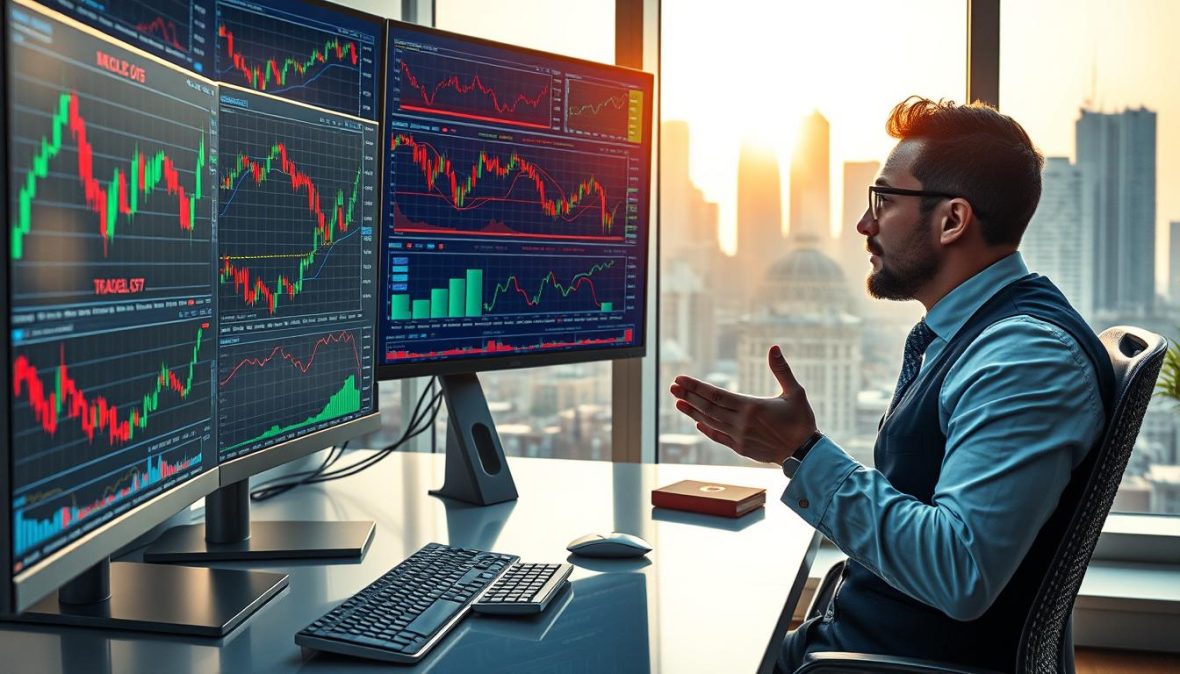
Here’s something that might surprise you: over 95% of cryptocurrency traders lose money within their first year. That statistic isn’t meant to scare you off. It’s meant to wake you up before you jump in blindly.
I’ve spent enough late nights staring at candlestick charts. Learning how to day trade crypto isn’t some get-rich-quick scheme. Despite what Twitter gurus might tell you, this market demands real skills.
The cryptocurrency market never sleeps. Volatility can swing 20% in an afternoon. Traditional stock market rules sort of apply, but also sort of don’t.
Through this guide, I’m sharing what actually works based on hands-on experience. No fluff. No empty promises.
You’ll learn proven crypto day trading strategies that separate profitable traders from gamblers. We’re talking risk management, technical analysis, and platform selection. Plus, you’ll get realistic expectations.
The U.S. crypto market has matured significantly. Major exchanges now offer sophisticated trading platforms. But that doesn’t mean it’s easy money.
This is about building actual skills. I wish someone had taught me these before my first dozen mistakes.
Key Takeaways
- Most cryptocurrency traders lose money due to lack of proper education and strategy
- Successful trading requires mastering technical analysis and risk management fundamentals
- The crypto market operates 24/7 with extreme volatility that demands constant attention
- Choosing the right trading platform and tools significantly impacts your success rate
- Realistic expectations and disciplined execution matter more than complex strategies
- Building trading skills takes time, practice, and learning from actual market experience
Understanding the Basics of Crypto Day Trading
Before you risk a single dollar, let’s break down what crypto day trading actually involves at its core. The foundation you build here determines whether you’ll join the profitable minority or become another statistic. I’ve watched too many eager traders skip these fundamentals, and they always pay for it later.
Learning how to day trade crypto successfully means understanding that you’re entering a fundamentally different market. There’s no closing bell to give you a break. The action continues around the clock, across every timezone, creating opportunities and risks simultaneously.
What is Day Trading?
Day trading means buying and selling crypto assets within a single 24-hour period. You’re not holding positions overnight or waiting weeks for profits to materialize. Instead, you capitalize on short-term price movements that might last minutes or hours.
The strategy revolves around making multiple trades throughout the day. Each trade targets smaller percentage gains that accumulate over time. While a position trader might wait months for a 50% return, day traders aim for 1-3% gains repeated dozens of times.
Here’s what makes crypto different from stock day trading: traditional markets close at 4 PM Eastern. Crypto never stops. This 24/7 nature creates both opportunity and exhaustion.
The key advantage? You’re never stuck in a position during unexpected news events overnight. Your capital stays liquid and available. The disadvantage? Markets can move dramatically while you sleep, potentially creating missed opportunities.
Consider real trading activity to understand the scale. PEPE’s 24-hour trading volume ranges between $400 million and $800 million, demonstrating typical day trading activity levels. That volume represents thousands of traders entering and exiting positions throughout the day.
Effective cryptocurrency market analysis requires understanding this volume-to-market-cap relationship. High volume relative to market cap indicates active trading interest. This creates the price volatility day traders need to profit.
Key Terminology in Crypto Trading
You’ll encounter specific terms daily that form the language of trading. Mastering this vocabulary isn’t academic—it’s practical knowledge you’ll use in every single trade. Let me walk you through the essentials that confused me initially.
Essential trading terms you need to know:
- Bid-Ask Spread: The difference between the highest price a buyer will pay and the lowest price a seller will accept. Narrow spreads indicate healthy liquidity.
- Order Book: A real-time list showing all buy and sell orders at different price levels. Reading order books helps predict short-term price direction.
- Liquidity: How easily you can enter or exit positions without significantly affecting the price. High liquidity means smoother trades.
- Slippage: When your order fills at a different price than you expected, usually during fast-moving markets or with low liquidity.
- Market Cap: Total value of all coins in circulation. It indicates overall project size but doesn’t directly correlate with trading opportunity.
- Trading Volume: The total dollar amount traded in a specific timeframe. Higher volume creates more day trading opportunities.
Understanding position types is equally critical. Going long means you’re betting the price will rise—you buy now to sell higher later. Going short means betting on price decline, which requires borrowing assets to sell immediately and buy back cheaper.
Order types determine how your trades execute. Market orders fill immediately at the current best price, giving you speed but less control. Limit orders only execute at your specified price or better, offering control but no guarantee of filling.
The stop-loss mechanism protects you from catastrophic losses. It automatically sells your position if price drops to a predetermined level. Every responsible trader uses stop-losses—the ones who don’t eventually blow up their accounts.
Margin trading amplifies both gains and losses by letting you control larger positions than your capital allows. I generally advise beginners to avoid margin until they’re consistently profitable with regular trading. The leverage can wipe out accounts frighteningly fast.
These fundamentals might seem basic, but they form the framework for everything that follows. Every experienced trader I know started exactly here, building vocabulary and understanding before risking real capital. Take the time to internalize these concepts completely.
Choosing the Right Cryptocurrency for Day Trading
The cryptocurrency you choose to day trade matters more than most beginners realize. I’ve watched countless new traders jump into random coins without understanding what makes something actually tradeable. The result? They get stuck in illiquid positions or miss the volatility they need to profit.
Not all cryptocurrencies work well for day trading. Some move too slowly, others have spreads that eat your profits. Many lack the volume needed to execute trades efficiently.
Understanding which coins offer the right conditions can dramatically improve your success rate.
Popular Cryptocurrencies for Day Trading
Bitcoin and Ethereum dominate the day trading landscape for good reasons. They offer massive liquidity with billions in daily volume and tight spreads. I personally start most trading days checking BTC and ETH charts because they’re reliable market anchors.
But here’s what I’ve learned over time. Sometimes the big names don’t move enough for day traders seeking quick gains. That’s where altcoins become interesting.
Solana, Cardano, and Polygon rank among the best altcoins for day trading. They combine decent liquidity with more dramatic price swings. These established projects maintain sufficient volume while offering volatility that Bitcoin sometimes lacks during sideways markets.
Then there are memecoins. DOGE, SHIB, and PEPE attract day traders specifically because of their wild price movements. Take PEPE as a concrete example—it ranks around #35-#56 among all crypto assets by market cap.
PEPE demonstrates the kind of volatility day traders hunt for, with price swings exceeding 20-50% during short bursts that create multiple profit opportunities throughout a single trading session.
In early January, PEPE gained over 50% in just seven days. On January 2 specifically, the token jumped more than 30% in a single day. Trading volume surpassed $1 billion.
Those numbers represent exactly what crypto volatility trading is all about.
The memecoin maintains $400-800 million in daily volume across exchanges like Binance, OKX, MEXC, and KuCoin. That’s reasonably liquid for day trading. It carries higher risk than established coins because sentiment can shift rapidly.
Factors to Consider When Selecting Coins
I run through a specific checklist for evaluating potential coins for day trading. These factors determine whether a cryptocurrency is genuinely tradeable or just a gamble.
Liquidity stands as the foundation of any day trading decision. You need sufficient trading volume to enter and exit positions without causing price slippage. I generally look for coins with at least $100 million in daily volume.
Order book depth matters too. A coin might show high volume but have wide gaps between buy and sell orders. That creates slippage when you’re trying to execute trades quickly.
Volatility comes next in importance. Day traders need price movement to generate returns. I’m specifically looking for coins that regularly produce 5-15% intraday swings.
Without that movement, there’s simply no opportunity to profit from short-term positions.
PEPE illustrates this perfectly with those 20-50% price swings during concentrated periods. That volatility creates multiple entry and exit points throughout a trading session.
Exchange availability affects your practical ability to trade. Coins listed only on obscure platforms create problems with liquidity concentration and potential security concerns. I stick to coins available on major exchanges where most trading activity happens.
Spread costs represent a hidden factor that many beginners overlook. The bid-ask spread directly impacts profitability. Lower-ranked coins often have wider spreads that can consume 1-3% of your trade value instantly.
Market capitalization ranking provides a useful screening tool. I generally avoid coins ranked below #100 for day trading because liquidity tends to drop dramatically. The sweet spot seems to be between #20-#80.
| Factor | Minimum Requirement | Ideal Range | Why It Matters |
|---|---|---|---|
| Daily Volume | $100M+ | $500M-$2B | Ensures smooth entry/exit without slippage |
| Volatility | 5% intraday | 10-20% intraday | Creates profit opportunities from price swings |
| Market Cap Rank | Top 100 | Top 20-80 | Balances liquidity with movement potential |
| Exchange Listings | 3+ major platforms | 5+ including Binance | Concentrates liquidity and reduces risk |
| Bid-Ask Spread | Under 0.5% | Under 0.2% | Minimizes transaction costs eating profits |
Price correlation with Bitcoin also factors into my selection process. During strong BTC trends, many altcoins simply follow Bitcoin’s direction. That can limit independent trading opportunities.
I look for coins that sometimes move independently. PEPE and other memecoins occasionally show this independence because they’re driven more by social sentiment.
The best altcoins for day trading ultimately combine all these elements. High volume provides liquidity. Reasonable volatility creates opportunities.
Multiple exchange listings ensure you can trade efficiently. Manageable spreads protect your profits.
For beginners, I’d recommend starting with established coins like ETH, SOL, or ADA. Build your skills with more predictable assets. Then gradually explore coins with greater volatility as you develop confidence.
Remember that crypto volatility trading requires matching your coin selection to your risk tolerance. What works for scalpers hunting 2-3% moves differs from what swing traders need. Your selection process should align with your specific approach and capital constraints.
Essential Tools for Successful Day Trading
I underestimated how much my tools would matter in day trading crypto. I thought strategy and discipline were everything. Without the right platforms and software, even the best strategy falls apart.
Your toolkit determines how fast you can execute trades. It controls what data you can access. Ultimately, it decides whether you catch profitable opportunities or watch them slip away.
Trading Platforms and Software
Your exchange is your command center. Choosing the wrong one costs you money every single day. I learned this after watching trades execute slowly during volatile periods.
In the United States, Coinbase Pro, Kraken Pro, and Gemini ActiveTrader serve as solid fiat on-ramps. They’re regulated and trustworthy. Many serious day traders expand to international platforms for better liquidity and lower fees.
Volume actually matters. Take the PEPE token example—Binance PEPE/USDT dominates with $172 million in 24-hour trading volume. That’s not just a number.
It means tighter spreads and faster fills. You get less slippage when entering or exiting positions.
- Liquidity depth – OKX shows $1.57 million sitting on the buy side for PEPE, telling you how much capital backs the order book
- Fee structure – Trading fees compound brutally when you’re making 10-20 trades daily
- Advanced order types – Stop-loss, trailing stops, and conditional orders protect your capital
- Execution speed – Milliseconds matter when prices move 3% in seconds
- Mobile functionality – You need reliable access when away from your desktop
Platforms like Binance, OKX, Bybit, KuCoin, MEXC, HTX, and Gate.io all provide robust trading infrastructure. Each has strengths—Bybit excels at derivatives, KuCoin offers tons of altcoins. OKX balances both.
Don’t overlook decentralized options either. Uniswap V3 provides DEX liquidity for tokens not yet on major exchanges. The interface takes getting used to, but it opens up early opportunities.
Test platforms with small amounts first. Each exchange has quirks in their order execution and interface. What works for another trader might frustrate you.
Analyzing Tools for Crypto Markets
Trading platforms show you prices. Analyzing tools tell you why prices move and where they might go next. This is where you separate guessing from informed decision-making.
I start every morning checking CoinMarketCap and CoinGecko for market overviews. They show which coins are pumping and overall market sentiment. It’s a quick temperature check before diving deeper.
For serious analysis, you need on-chain data. Platforms like Glassnode and Santiment reveal what’s happening beneath the surface. They track whale movements, exchange flows, and network activity.
I’ve caught several profitable trades by noticing large amounts flowing out of exchanges. This signals reduced selling pressure.
Let’s talk about crypto trading bots honestly. I was skeptical at first. I still think beginners should learn manual trading before automating anything.
Bots have legitimate uses. They execute strategies automatically, especially useful for arbitrage or responding to specific technical signals. Some traders rely on bots for day trading crypto signals.
Popular bot platforms include:
- 3Commas – User-friendly interface with pre-built strategies and backtesting
- Cryptohopper – Cloud-based solution with marketplace for trading signals
- TradeSanta – Simple setup focused on long and short strategies
- Pionex – Built-in bots with exchange integration
Learn the mechanics manually first. Understand why certain setups work before automating them. Crypto trading bots amplify both good strategies and bad ones.
Portfolio tracking tools matter too. Delta and Blockfolio let you monitor performance across multiple exchanges in one place. Seeing your overall P&L helps with strategic decision-making.
Risk management tools deserve special mention. Your platform should support stop-loss orders, trailing stops, and position sizing calculators. These aren’t optional features—they’re essential safeguards that prevent catastrophic losses.
Using Charting Software
TradingView has become the industry standard, and for good reason. I use it every single day. Nothing else combines real-time data, customization, and reliability quite like it.
The free version works fine for casual analysis. The Pro subscription unlocks features day traders actually need. Worth every penny in my experience.
What makes charting software valuable? It’s not just drawing lines on price graphs. Here’s what I use TradingView for constantly:
- Multiple timeframe analysis – Viewing 1-minute, 5-minute, and 1-hour charts side by side
- Volume profile overlays – Seeing where the most trading activity occurred
- Support and resistance plotting – Marking key price levels that tend to hold
- Indicator customization – Setting RSI, MACD, and Bollinger Bands to my preferred parameters
- Alert creation – Getting notified when price hits specific levels
- Chart templates – Saving my preferred layouts for different trading styles
The mobile app keeps you connected when you’re away from your desk. I’ve executed profitable trades from coffee shops. An alert caught a breakout I’d been watching.
Some exchanges have decent built-in charting, but they’re limited. Separate charting software gives you flexibility to analyze any asset. You’re not locked into one platform’s tools.
Advanced features like replay mode let you practice on historical data. You can test strategies on past price action without risking real money. This accelerated my learning curve significantly.
Integration matters too. TradingView connects with many exchanges for direct trading from charts. You spot a setup, draw your levels, and execute without switching windows.
Quality tools don’t guarantee profits, but they absolutely give you better odds.
You’ll spend significant time staring at charts and clicking through platforms. Invest in tools that reduce friction and provide accurate data. The few dollars saved on a free plan costs you hundreds in missed opportunities.
Start with the basics: a reliable exchange with good liquidity and TradingView for charting. As you develop your strategy, add specialized tools that address your specific needs. Don’t buy everything at once, but don’t handicap yourself with inadequate software either.
Developing a Winning Day Trading Strategy
The difference between profitable traders and those who burn through capital comes down to having a clear, tested strategy. I’ve watched countless beginners jump into crypto markets with nothing but enthusiasm and a Coinbase account. That approach rarely ends well.
Theory without practice is worthless in day trading. You need crypto day trading strategies that actually work in real market conditions, not just on paper.
This means choosing a trading style that matches your personality. It also means managing risk like your financial life depends on it. Set profit goals that keep you grounded instead of chasing fantasies.
Scalping vs. Swing Trading: Choosing Your Style
Two primary approaches dominate the day trading landscape: scalping and swing trading. Your choice between them will shape everything—from how much time you spend staring at charts to how you handle stress.
Scalping involves making dozens of trades daily, targeting tiny price movements. We’re talking 1-3% gains repeated throughout the day. Scalpers hold positions for minutes, sometimes literally seconds.
It requires intense focus, lightning-fast execution, and honestly, nerves of steel.
Swing trading within the day-trading timeframe means holding positions for several hours. You’re capturing larger intraday swings—maybe 5-15% moves. I personally lean toward swing trading because scalping feels like trying to catch falling knives while juggling chainsaws.
Looking at real market data helps illustrate these concepts. PEPE’s trading patterns show exactly the kind of volatility both strategies exploit.
Volume fluctuations from $394 million to $1.8 billion in consecutive days—that’s a 77% increase—signal changing momentum. Day traders capitalize on these shifts.
When volume jumped 600% during a 30% price rally, that’s the sweet spot swing traders dream about. Scalpers would have made dozens of smaller trades during that same rally. Each trade captures a fraction of the total move.
| Strategy Element | Scalping Approach | Swing Trading Approach | Best For |
|---|---|---|---|
| Trade Duration | Seconds to minutes | Hours within same day | Scalping: Full-time traders; Swing: Part-time traders |
| Profit Targets | 1-3% per trade | 5-15% per trade | Scalping: Consistent small gains; Swing: Larger moves |
| Daily Trade Volume | 20-100 trades | 2-8 trades | Scalping: High-frequency focus; Swing: Selective entries |
| Time Commitment | 6-8 hours continuous | 2-4 hours monitoring | Scalping: Full attention; Swing: Periodic checks |
| Stress Level | Very high intensity | Moderate intensity | Scalping: Adrenaline seekers; Swing: Calculated planners |
Your personality matters more than you think. If you get anxious watching rapid price movements, scalping will destroy you emotionally. If you have a day job, scalping isn’t realistic anyway.
Choose based on available time, risk tolerance, and honestly how you handle stress.
Importance of Risk Management
Risk management separates professionals from gamblers. Most beginners lose money not because they pick wrong directions but because they don’t manage risk properly.
The golden rule I follow religiously: never risk more than 1-2% of total capital on a single trade. If you’ve got $10,000, that’s $100-200 maximum loss per trade. This rule alone has saved my account multiple times.
Use stop-loss orders like your trading life depends on them. Set them before entering trades, not emotionally during drawdowns when panic clouds judgment. I’ve violated this rule exactly twice, and both times cost me significantly.
Position sizing matters tremendously. Don’t go all-in on one trade regardless of how “certain” you feel.
I limit myself to 3-5 positions maximum when day trading to avoid overexposure. Diversification isn’t just for long-term investors.
Calculate your risk-reward ratio before every single trade. I aim for minimum 2:1, meaning if I’m risking $100, I’m targeting $200 profit. This mathematical advantage means you can be wrong 50% of the time and still come out ahead.
Here’s a practical risk management checklist I use:
- Calculate position size based on stop-loss distance and 1-2% risk rule
- Set stop-loss order immediately after entry
- Verify risk-reward ratio meets 2:1 minimum threshold
- Check total portfolio exposure doesn’t exceed 10% in single asset
- Document trade rationale before execution
Market timing for crypto traders involves recognizing when volatility and volume align. That’s your opportunity window.
The PEPE volume spikes correlated perfectly with price movements—this demonstrates timing principles in action.
Setting Realistic Profit Goals
Unrealistic expectations kill more trading accounts than bad technical analysis. I’ve seen traders blow up accounts chasing weekly doubles instead of sustainable growth.
Aiming for 2-5% daily returns is ambitious but achievable with disciplined execution. Some days you’ll hit 10%, other days you’ll break even or take small losses. That’s normal.
Monthly targets of 20-40% are more realistic than doubling your account weekly.
Let me break down realistic expectations versus fantasy:
- Realistic daily goal: 2-5% portfolio growth with proper risk management
- Realistic weekly goal: 10-25% compounded returns during favorable market conditions
- Realistic monthly goal: 20-40% total portfolio growth with some losing weeks factored in
Develop a written trading plan covering entry criteria, exit criteria, position size, and risk per trade. I keep mine in a Google Doc that I reference before every trade. Review and refine based on actual results, not emotions or what worked for someone else.
The most effective crypto day trading strategies combine technical precision with psychological discipline. Track your performance metrics weekly.
Note patterns in your winning trades versus losing ones. Most traders discover their losses come from violating their own rules, not from market unpredictability.
Effective market timing for crypto traders means waiting for high-probability setups rather than forcing trades. Patience pays more than constant activity.
Important Indicators and Analysis Techniques
Every successful day trade starts with proper analysis. You must understand what charts tell you before risking a dollar. Without a solid analytical framework, you’re gambling on coin flips.
Strategic decisions backed by data beat gut feelings every time. I’ve watched countless traders jump into positions based on social media hype. They get wrecked when the market moves against them.
Technical analysis for cryptocurrency gives you an edge in reading market psychology. It helps predict probable price movements with greater accuracy. Combine that with fundamental awareness, and you’ve got a complete picture.
Technical Analysis Fundamentals
Chart reading is your primary skill as a day trader. I spend hours analyzing price action because that’s where truth lives. Price shows what people actually do with their money.
Candlestick patterns are the language of price movement. Each candle tells a story about buyers versus sellers. A doji candle shows indecision—neither side won that round.
Hammer patterns near support levels often signal reversals. Buying pressure returns at these key zones. Engulfing patterns indicate strong momentum shifts ahead.
Support and resistance levels function as psychological barriers. Price tends to bounce or break through these zones. I mark these levels on every chart I analyze.
They guide my entry and exit points with precision. Price approaching resistance means prepare for rejection or breakout. After confirmation, these zones offer clear trading opportunities.
Volume analysis confirms whether price moves are legitimate or fake-outs. A breakout on low volume is suspect. High volume validates the move and suggests continuation.
I never trust a big price spike without checking volume. This simple check has saved me from bad trades. Volume tells you if the market truly believes in a move.
“The tape doesn’t lie—price action and volume tell you everything you need to know if you learn to read them properly.”
Key Indicators for Day Traders
Indicators turn price data into actionable day trading crypto signals. They use mathematical formulas to reveal patterns. Think of them as translators for market behavior.
RSI (Relative Strength Index) measures momentum and identifies extremes. The scale runs from 0 to 100. RSI above 70 indicates overbought conditions.
PEPE’s RSI reading hit 82 recently. That indicated overbought conditions—price was extended and due for pullback. Exit long positions or consider shorting at these levels.
RSI below 30 suggests oversold territory. Bounces often occur at these extreme readings. I keep RSI on my charts constantly.
It catches extremes that aren’t obvious from price alone. RSI near neutral levels (40-60) shows balanced market conditions. No clear directional pressure exists at these readings.
Moving averages smooth out price noise to reveal underlying trends. The 9-day and 21-day EMAs are my go-to tools. These Exponential Moving Averages work perfectly for day trading.
The faster 9-day crossing above the slower 21-day signals bullish momentum. Cross below signals bearish momentum building. These crossovers provide clear entry and exit signals.
Here’s how the main indicators compare for day trading purposes:
| Indicator | Primary Function | Best Used For | Key Signal |
|---|---|---|---|
| RSI | Momentum measurement | Overbought/oversold conditions | Above 70 or below 30 |
| Moving Averages | Trend identification | Direction and crossover signals | 9-day crossing 21-day |
| MACD | Momentum shifts | Trend changes and divergences | Histogram and signal line cross |
| Bollinger Bands | Volatility measurement | Price extremes and squeezes | Price touching bands |
MACD (Moving Average Convergence Divergence) shows momentum shifts clearly. It uses histogram bars and signal line crosses. MACD line crossing above signal line indicates bullish momentum building.
Divergences between MACD and price often predict reversals. These signals appear before the actual reversal happens. Watch for these divergences carefully during your trading day.
Bollinger Bands measure volatility using standard deviations. They plot around a moving average to show extremes. Price touching the upper band suggests overbought conditions.
Lower band touches indicate oversold territory where bounces occur. Band squeezes often precede explosive moves in either direction. When bands contract, big moves are coming soon.
Derivatives data provides additional insights for crypto traders. PEPE’s open interest hit $257.18 million recently. That represented a 7.87% daily increase in trader participation.
More contracts open means more capital committed to positions. This indicates potential volatility ahead for that asset. Higher open interest often leads to bigger price swings.
Technical indicators showing 79% bearish market feeling can be contrarian signals. Extreme sentiment often precedes reversals in the opposite direction. Everyone who wanted to sell already has.
There’s no one left to push price lower. These extremes create buying opportunities for contrarian traders. Market sentiment reaches extremes before major reversals occur.
Focus on 3-4 indicators rather than cluttering your charts. I use RSI, EMAs, MACD, and volume consistently. Find combinations that work for your strategy.
Stick with them until they become second nature. Too many indicators create confusion and conflicting signals. Master a few tools instead of dabbling in dozens.
Utilizing Fundamental Analysis
Fundamental analysis in crypto differs completely from traditional stocks. You’re not analyzing earnings reports or P/E ratios. Instead, evaluate network adoption metrics and development activity.
For day trading, fundamentals matter less than technical setups. However, major news can override your technical analysis instantly. A regulatory announcement can tank a coin regardless of RSI.
I’ve had perfect technical setups destroyed by unexpected news. Exchange delistings or regulatory crackdowns move faster than charts. Stay aware of fundamental developments throughout your trading day.
Here’s what I monitor throughout each trading day:
- Regulatory developments that might impact exchange listings or legal status
- Major partnership announcements or protocol upgrades that drive sentiment
- Whale wallet movements showing large holders accumulating or distributing
- Exchange listing news which often triggers volume spikes
- Broader market narratives like DeFi trends or NFT cycles
I scan crypto news sites and Twitter throughout trading hours. You need real-time awareness because crypto news moves fast. A single tweet can trigger 20% moves in minutes.
Influential figures hold enormous sway over crypto markets. Their statements create immediate price reactions across multiple coins. Monitor these voices closely during your trading sessions.
Integrating technical analysis for cryptocurrency with fundamental awareness creates a complete approach. Technicals guide your entry and exit timing with precision. Fundamentals help you avoid landmines that could blow up solid trades.
Master the technical side first—that’s your bread and butter. Then layer in fundamental awareness as a risk filter. Both aligned creates the highest probability setups.
Technicals usually win for short-term trades during conflicts. However, fundamentals determine whether you should trade that coin at all. Poor fundamentals mean avoid the asset entirely regardless of charts.
Market Trends and Their Impact on Day Trading
Crypto markets move through recognizable cycles that day traders can exploit. These patterns repeat across different timeframes, from months-long macro trends down to hourly movements. Learning to read these cycles transforms how you approach each trading day.
The psychological forces driving these patterns remain consistent. Fear and greed alternate in waves, creating opportunities for traders who recognize the cycle. Panic often signals your moment to look for entries.
Recognizing Cyclical Patterns in Crypto Markets
Every market cycle contains four distinct phases that influence your day trading decisions. I’ve watched these patterns play out dozens of times. Understanding where we are in the cycle gives you context for your technical setups.
The accumulation phase happens when smart money quietly builds positions. Prices move sideways, volatility drops, and most traders get bored. Experienced players are loading up—but it looks boring on charts.
Then comes the markup phase where prices start climbing. FOMO kicks in hard. Everyone who sat out accumulation suddenly wants in.
This phase creates the best momentum trading opportunities for day traders. You’ll see clean trends and strong volume. The momentum builds as more traders jump in.
The distribution phase is where early buyers take profits. Prices still look strong, but volume patterns shift. You’ll see more resistance at highs, and rallies lose steam faster.
Day traders need to recognize this transition. The character of the market changes. Your strategy must adapt to these shifting conditions.
Finally, the markdown phase brings declining prices and widespread fear. Weak hands capitulate. Media turns negative.
This phase eventually sets up the next accumulation. But timing that bottom is tricky. Patience becomes your most valuable tool.
For effective cryptocurrency market analysis, these macro cycles compress into intraday timeframes. A single trading session might show mini-cycles that mirror these larger patterns. During bull markets, every dip gets bought aggressively.
In bear markets, rallies get sold into. Understanding this context helps you pick the right trades. Your timing improves when you know the broader market phase.
| Market Phase | Price Action | Trader Sentiment | Day Trading Strategy |
|---|---|---|---|
| Accumulation | Sideways, low volatility | Boredom, disinterest | Range trading, patience |
| Markup | Rising trends, breakouts | FOMO, optimism | Trend following, momentum |
| Distribution | Choppy highs, resistance | Euphoria fading | Scalping, caution on longs |
| Markdown | Declining, capitulation | Fear, panic selling | Short trades, reversal hunting |
I’m constantly monitoring sentiment indicators to gauge which phase we’re in. The Crypto Fear & Greed Index provides quantifiable data that removes emotion from your analysis. Extreme fear often presents contrarian buying opportunities.
Everyone gets scared, which historically marks bottoms. Later sentiment can collapse even further, reflecting widespread panic. Yet some coins show resilience during these periods.
This disconnect between sentiment and price action creates tradable opportunities. Social sentiment can shift from fear to optimism quickly. Prices can jump dramatically when narratives flip.
This demonstrates how quickly crypto stories change. The crypto volatility trading opportunity exists precisely in these sentiment swings. Smart traders capitalize on these emotional shifts.
I’m constantly gauging whether we’re in a risk-on or risk-off environment. Risk-on means traders pile into speculative assets like memecoins. Risk-off means flight to stability—Bitcoin, stablecoins, or exiting crypto entirely.
How Breaking News Drives Price Volatility
News impact in crypto cannot be overstated. Unlike traditional markets with scheduled earnings reports, crypto news hits unpredictably. A single tweet or regulatory announcement can trigger 20% moves in minutes.
Exchange listings represent major catalysts. Binance or Coinbase listings make volume explode. Regulatory decisions from the SEC can tank entire sectors overnight.
Protocol upgrades sometimes pump prices, sometimes cause “sell the news” dumps. Security breaches and hacks create immediate selloffs. Major partnerships or institutional adoption drive rallies.
The challenge is separating significant news from routine noise. That skill takes time to develop. Experience teaches you which headlines actually matter.
Bearish traders faced $2.99 million in liquidations during a PEPE surge. That was news-driven volatility causing cascading liquidations. Shorts got squeezed hard.
Those liquidations themselves became fuel for further upward movement. This feedback loop is uniquely crypto. Understanding these dynamics gives you an edge.
For proper cryptocurrency market analysis, I monitor several news sources simultaneously:
- CoinDesk – Industry standard for breaking news and analysis
- The Block – Deep investigative reporting on protocols and markets
- Decrypt – Accessible coverage of major developments
- Crypto Twitter – Real-time information flow (requires noise filtering)
Set up price alerts for coins you’re actively trading. Major exchange announcements often leak or get front-run. This creates profitable windows if you’re paying attention.
I’ve caught several moves just by monitoring announcement channels before official releases. Speed matters in crypto trading. Early information provides a significant advantage.
Regulatory news deserves special attention. SEC announcements about enforcement actions or rule changes move the entire market. Sometimes these moves are overdone—creating countertrend opportunities once the dust settles.
Also watch Bitcoin’s price action religiously. BTC is still the market leader. Bitcoin dumps typically make altcoins follow harder—usually with 2-3x the percentage move.
Bitcoin ranges quietly often create altcoin day trading opportunities. Correlation analysis between coins helps predict moves. Ethereum pumping while Bitcoin stays flat tells a story.
If memecoins are all rallying together, that signals risk-on sentiment across the market. These correlations provide valuable context for your trades. Understanding relationships between assets improves your decision-making.
The relationship between market cycles, sentiment indices, and news flow creates the context for your day trading decisions. Technical setups work significantly better when aligned with favorable market structure. Positive sentiment conditions improve your win rate.
A perfect chart pattern in a risk-off environment might fail. A mediocre setup during FOMO can exceed targets. Context matters as much as the setup itself.
This contextual awareness separates consistent day traders from those who struggle. You’re not just trading price patterns—you’re trading the collective psychology of market participants. Master this broader perspective, and your individual trade setups become much more reliable.
Statistics to Guide Your Day Trading Practice
Let me share some hard data that changed how I approach day trading entirely. I thought success was about finding the perfect strategy or the next big coin. Reality hit hard when I discovered the numbers behind actual trading performance.
Statistics don’t just inform your practice—they save you from costly illusions. The data reveals patterns that emotional trading obscures. Understanding these numbers helps you set realistic goals rather than chasing fantasies sold by course peddlers.
The Reality Behind Day Trader Success Rates
Here’s the truth that nobody wants to hear: roughly 90% of day traders lose money over time. This isn’t specific to crypto—it’s consistent across stocks, forex, and digital assets. I’m not sharing this to discourage you but to emphasize how critical edge and discipline become.
In crypto markets, the statistics might be slightly better due to higher volatility creating more opportunities. But it’s still an uphill battle. The elevated price swings give skilled traders more chances to profit.
Successful day traders typically maintain win rates between 40-60%, not the 80-90% that scammers promise. I was confused at first. How do you profit if you’re wrong half the time?
How Win Rates Actually Generate Profits
The math behind profitable trading surprised me when I finally understood it. You can absolutely make money with a 45% win rate. This works when you implement proper risk-reward ratios of 2:1 or better.
Imagine you execute 100 trades with a 45% win rate. You win 45 trades, each earning $200. That’s $9,000 in gross profit.
You lose 55 trades, each losing $100. That’s $5,500 in losses. Net profit: $3,500 despite losing more trades than you won.
This is why risk management and position sizing matter infinitely more than win rate. Trading isn’t about being right—it’s about making more when you’re right. You need to lose less when you’re wrong.
“The goal of a successful trader is to make the best trades. Money is secondary.” – Alexander Elder
This mathematical reality completely shifted how I evaluate trading performance. I stopped obsessing over every losing trade. I started focusing on whether my risk-reward setup was sound.
You stop revenge trading once you grasp this concept. You start thinking probabilistically instead. Now let’s examine specific coin statistics to understand what makes certain assets among the best altcoins for day trading.
Analyzing Trading Metrics That Actually Matter
PEPE maintains a market cap around $2.05 billion with fully diluted valuation matching—meaning all tokens are already in circulation. For day traders, this eliminates future dilution risk. You won’t wake up to find your position devalued by surprise token unlocks.
The 24-hour trading volume sits at $428.82 million, representing 20.83% of market cap. This volume-to-market-cap ratio indicates healthy liquidity. I generally look for ratios above 15-20% when evaluating trading candidates.
This means you can enter and exit positions without massive slippage. On high-activity days, PEPE’s ratio hits 25%, which is excellent for day trading. Daily average transaction volume increased from $100 million to $180 million over recent months.
| Metric Category | PEPE Data Point | Trading Significance |
|---|---|---|
| Market Cap | $2.05 billion | Sufficient size for stable trading |
| 24h Volume | $428.82 million | High liquidity for entry/exit |
| Volume/Cap Ratio | 20.83% (up to 25%) | Active trading environment |
| Whale Transfers | 36 over $1M in single day | Major player activity signals |
| Top Wallet Control | 15 wallets hold 33% | Manipulation risk/opportunity |
36 whale transfers exceeding $1 million in a single day signals major players are active. These movements often precede significant price action. If you’re monitoring whale alerts, this gives market timing for crypto traders a tangible edge.
I use whale tracking services to get notifications when large transfers occur. It’s not foolproof, but it’s helped me anticipate volatility more than once. Big money moves first, and retail follows.
Holder distribution tells another important story. PEPE has approximately 507,200 holders, demonstrating decent decentralization. However, the top 15 wallets control 33% of supply.
This concentration means whale manipulation is absolutely possible, creating both risk and opportunity. Large holders can move markets with single transactions. I’ve been caught on the wrong side of whale dumps before.
Beyond individual coin analysis, you should track your personal trading metrics religiously. I maintain a trading journal logging every trade. I note entry reason, exit reason, position size, result, and even my emotional state.
This sounds tedious, but reviewing this data monthly reveals patterns invisible in the moment. Maybe you’re more successful trading morning hours when you’re fresh. Perhaps your win rate drops after taking losses because you’re revenge trading.
I discovered I made my worst decisions after 8 PM when fatigue set in. Now I stop trading after dinner regardless of market conditions. Key metrics to track in your own performance include:
- Average win size compared to average loss size
- Profit factor (gross profit divided by gross loss)
- Maximum drawdown and how long recovery takes
- Risk-adjusted returns relative to exposure
- Trades per day and average holding time
Graph your equity curve over time. It should trend upward with manageable drawdowns. If you see consistent downward slopes or drawdowns exceeding 30%, something fundamental needs adjustment.
For selecting which coins to trade, compare volume metrics across candidates. Higher volume relative to market cap generally means better trading conditions. The best altcoins for day trading aren’t necessarily the ones with biggest price pumps.
They’re the ones with consistent volume, reasonable volatility, and enough liquidity for your position sizes. Statistics don’t predict individual trade outcomes. No amount of data analysis tells you if your next trade wins or loses.
But they absolutely guide expectation setting and strategic adjustments based on what actually works. That distinction keeps you in the game long enough to develop genuine skill. Understanding these numbers transformed my trading from emotional gambling to calculated risk-taking.
The markets haven’t changed, but my approach to market timing for crypto traders became data-driven. That shift made all the difference between consistent losses and sustainable profits.
Predictions for the Future of Crypto Day Trading
The future of cryptocurrency day trading keeps changing as new trends reshape the markets. The landscape looks different from even two years ago. Some changes will create new opportunities for day traders.
Others might force us to adapt our crypto day trading strategies in unexpected ways. The market is maturing, but volatility isn’t disappearing. It’s just changing form.
Trends to Watch in the Next Year
Institutional participation keeps growing, creating challenges for retail day traders. Traditional finance players are launching crypto trading desks with serious capital. This brings more liquidity to the markets.
More liquidity means smoother price movements. Smoother movements mean smaller profit windows. The extreme volatility that day traders need is changing.
Algorithmic trading and high-frequency trading bots are getting scary good. These sophisticated systems use machine learning to spot patterns faster than humans. Retail day traders need better tools and sharper strategies to compete.
The playing field isn’t level anymore. AI-driven trading signals might help close the gap. Pattern recognition technologies offer new advantages.
The memecoin phenomenon continues to create trading opportunities and risks. Take PEPE coin as an example of speculative market behavior. Price predictions reveal important insights about trader psychology.
Average price projections show PEPE rising from $0.0000072 in 2026 to $0.0000315 by 2031. That’s roughly a 337% increase over five years. Year-over-year ROI projections show +36% in 2027 and +87% in 2028.
| Year | Minimum Price | Average Price | Maximum Price | Projected ROI |
|---|---|---|---|---|
| 2026 | $0.0000062 | $0.0000072 | $0.0000088 | Baseline |
| 2027 | $0.0000084 | $0.0000098 | $0.0000119 | +36% |
| 2028 | $0.0000135 | $0.0000183 | $0.0000227 | +87% |
| 2031 | $0.0000215 | $0.0000315 | $0.0000410 | +325% |
One bullish trader projected PEPE’s market cap climbing from $1.7 billion to $69 billion by late 2026. That’s nearly a 40x increase. These predictions, whether accurate or not, drive trader behavior and create volatility.
That volatility creates day trading opportunities right now.
Layer-2 scaling solutions are changing the economics of day trading. Ethereum’s L2 networks reduce transaction costs dramatically. Gas fees currently eat significant chunks of profit on smaller trades.
L2 solutions make it viable to day trade smaller positions. This opens doors for traders with limited capital.
Cross-chain trading and decentralized exchanges offer more sophisticated options beyond centralized platforms. DEX interfaces are becoming more user-friendly. Cross-chain bridges are becoming more reliable.
How Regulations Might Change Day Trading
Regulations are the wild card in any cryptocurrency market analysis. The U.S. regulatory landscape remains frustratingly uncertain. That uncertainty affects how we can trade.
SEC actions against exchanges directly impact day trading accessibility. Debates about which tokens qualify as securities create confusion. Several regulatory developments are worth watching closely.
Stricter KYC and AML requirements are already happening across major exchanges. Restrictions on leverage trading have already hit some platforms. U.S. users face limits of 3x leverage on certain exchanges.
Transaction reporting requirements are coming soon. The Infrastructure Bill’s 2026 broker reporting rules could require exchanges to report transactions. This affects how gains are tracked and taxed.
Heavier regulation might reduce available trading pairs for U.S. residents. Some traders might move to offshore platforms, creating legal gray areas. Clear regulations could bring institutional confidence and market stability.
Some analysts predict a comprehensive regulatory framework emerging by 2025-2026. That could be positive long-term, bringing clarity to the space. But it might reduce short-term volatility.
Stay adaptable as market structure evolves. The crypto day trading strategies that work today might need serious adjustment. Diversify your skills beyond just technical analysis.
Understand regulatory developments and embrace new tools and technologies. Be prepared for market conditions to shift without warning.
The cryptocurrency market analysis for coming years suggests continued growth in adoption. Market maturity will increase, but periodic volatility spikes will still create opportunities. The opportunities won’t disappear—they’ll just look different.
Keep learning, keep adapting, and maintain healthy skepticism toward extreme predictions. Traders who succeed will read these changes and adjust accordingly.
Frequently Asked Questions About Day Trading Crypto
These questions come up constantly. Let me give you straight answers based on actual trading experience.
Can You Actually Make Money Day Trading?
Profitability isn’t guaranteed—that’s the honest truth. Learning how to day trade crypto successfully takes months of practice and discipline. Most beginners lose money initially.
Those who survive develop consistent strategies and manage risk properly. You’re competing against sophisticated algorithms and experienced traders. Small advantages compound over time, but forget the get-rich-quick fantasies.
Approach this as a skill that requires dedication, not a lottery ticket.
Starting Capital Requirements
Technically you could start with $100. However, I’d recommend $2,500-$5,000 minimum for serious trading. Smaller amounts get eaten by crypto exchange fees quickly.
Binance charges roughly 0.1% per trade. Coinbase Pro charges around 0.5%. On a $500 account risking 2% per trade, that’s only $10 per position.
Only use risk capital you can afford to lose completely. Never trade with rent money or emergency funds.
Understanding Trading Risks
Multiple risk layers exist here. Market volatility can produce 20-30% daily swings. Exchange outages happen during crucial moments—I’ve experienced this frustratingly.
Platform security breaches remain possible. Psychological risks like emotional trading and FOMO destroy more accounts than technical failures.
Liquidity matters too. Binance PEPE/USDT shows $3.7 million buy depth and $5 million sell depth within 2%. Smaller coins offer far less liquidity, making exits difficult during crashes.
Overtrading increases fee drag significantly.
FAQ
Is day trading crypto actually profitable?
How much capital do you need to start day trading crypto?
Is day trading crypto actually profitable?
How much capital do you need to start day trading crypto?
What are the risks involved in crypto day trading?
What crypto exchange fees should I expect when day trading?
Which are the best altcoins for day trading?
What technical analysis indicators are most important for crypto day trading?
How do crypto trading bots work and should I use one?
What’s the difference between scalping and swing trading in crypto?
How important is cryptocurrency market analysis beyond technical indicators?
What risk management rules should I follow when day trading crypto?
How does market timing work for crypto traders in a 24/7 market?
What are realistic profit expectations for crypto day trading?
What are the risks involved in crypto day trading?
What crypto exchange fees should I expect when day trading?
Which are the best altcoins for day trading?
What technical analysis indicators are most important for crypto day trading?
How do crypto trading bots work and should I use one?
What’s the difference between scalping and swing trading in crypto?
How important is cryptocurrency market analysis beyond technical indicators?
What risk management rules should I follow when day trading crypto?
How does market timing work for crypto traders in a 24/7 market?
What are realistic profit expectations for crypto day trading?
